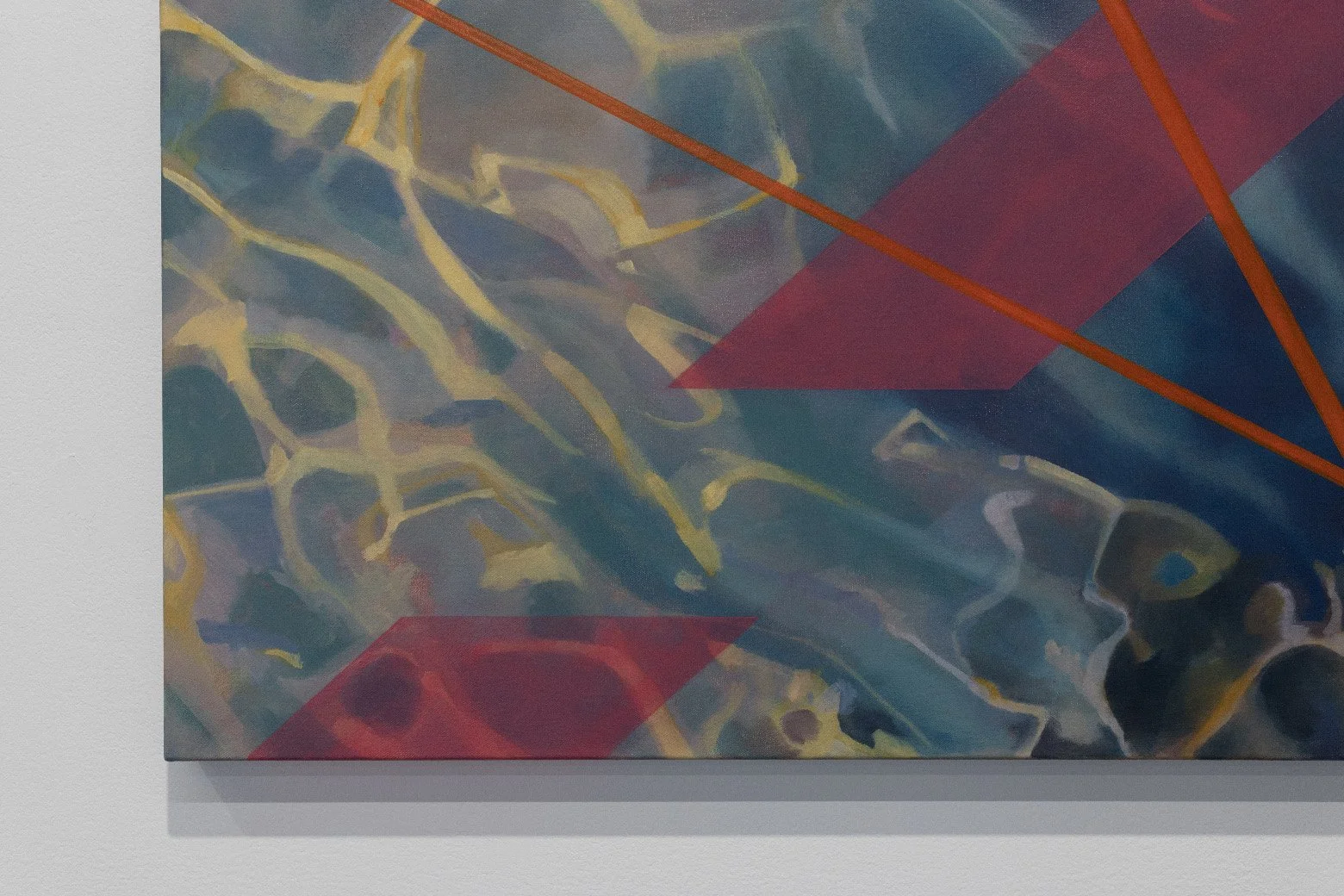
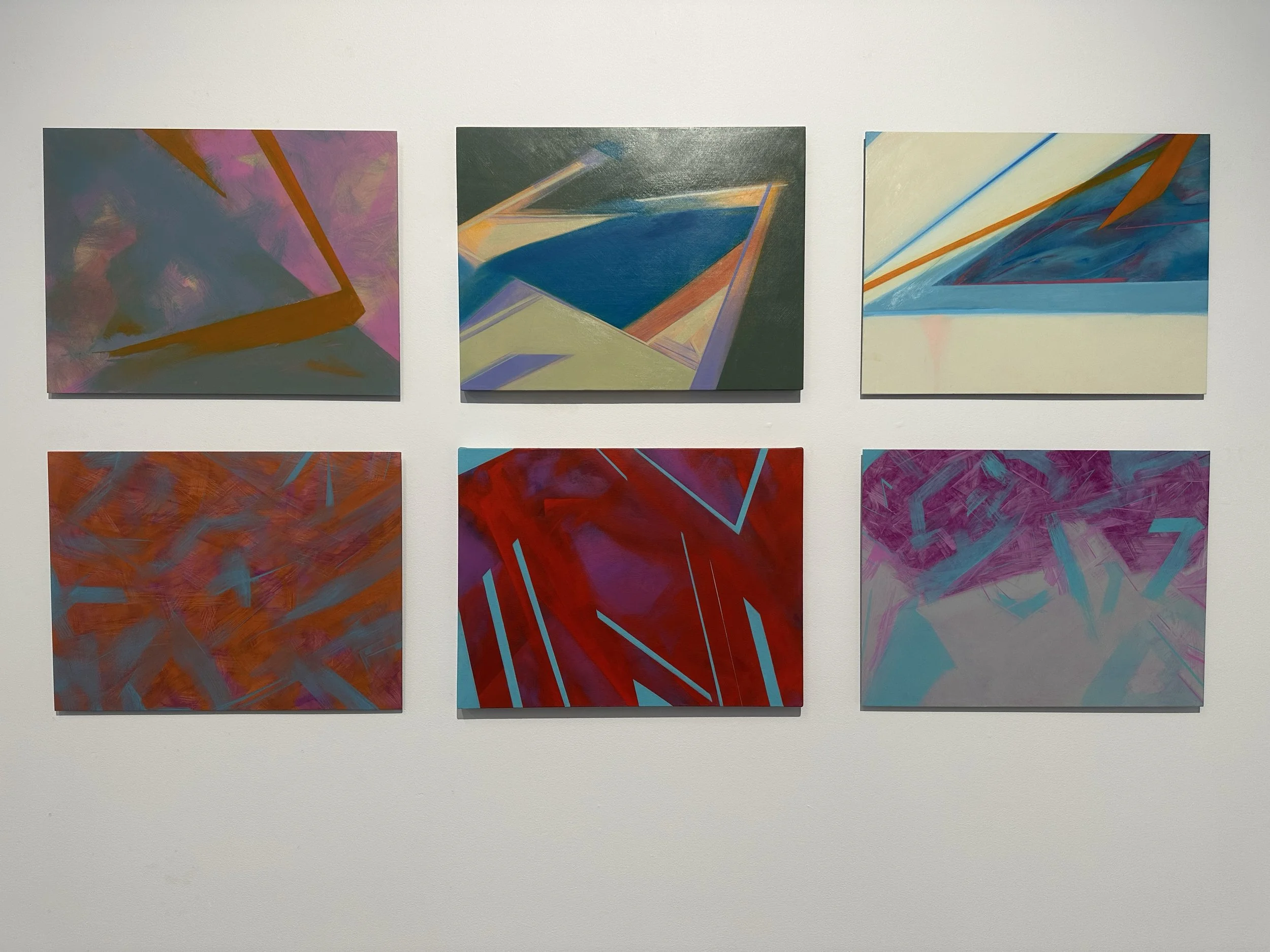
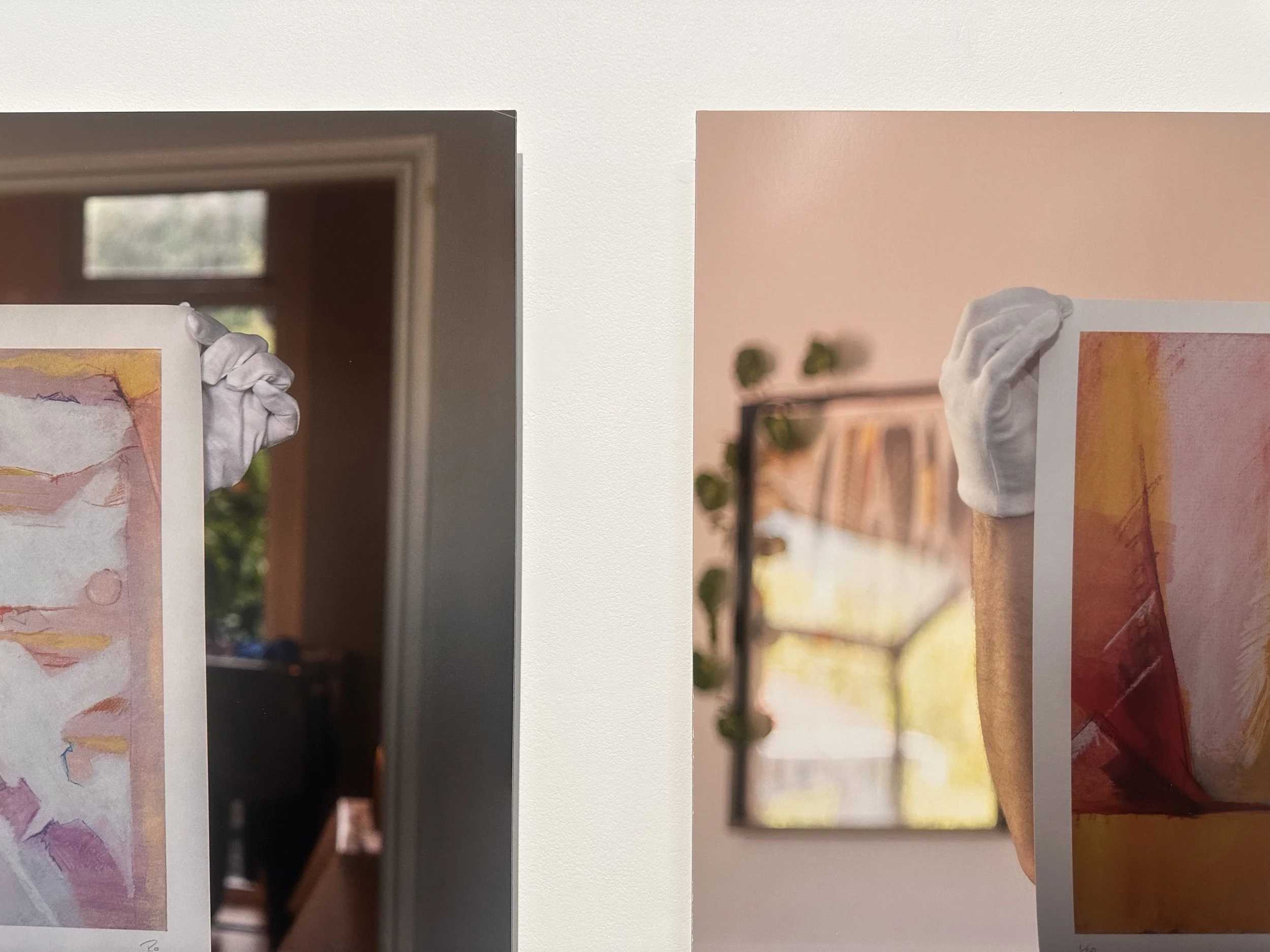
material / space (2026)
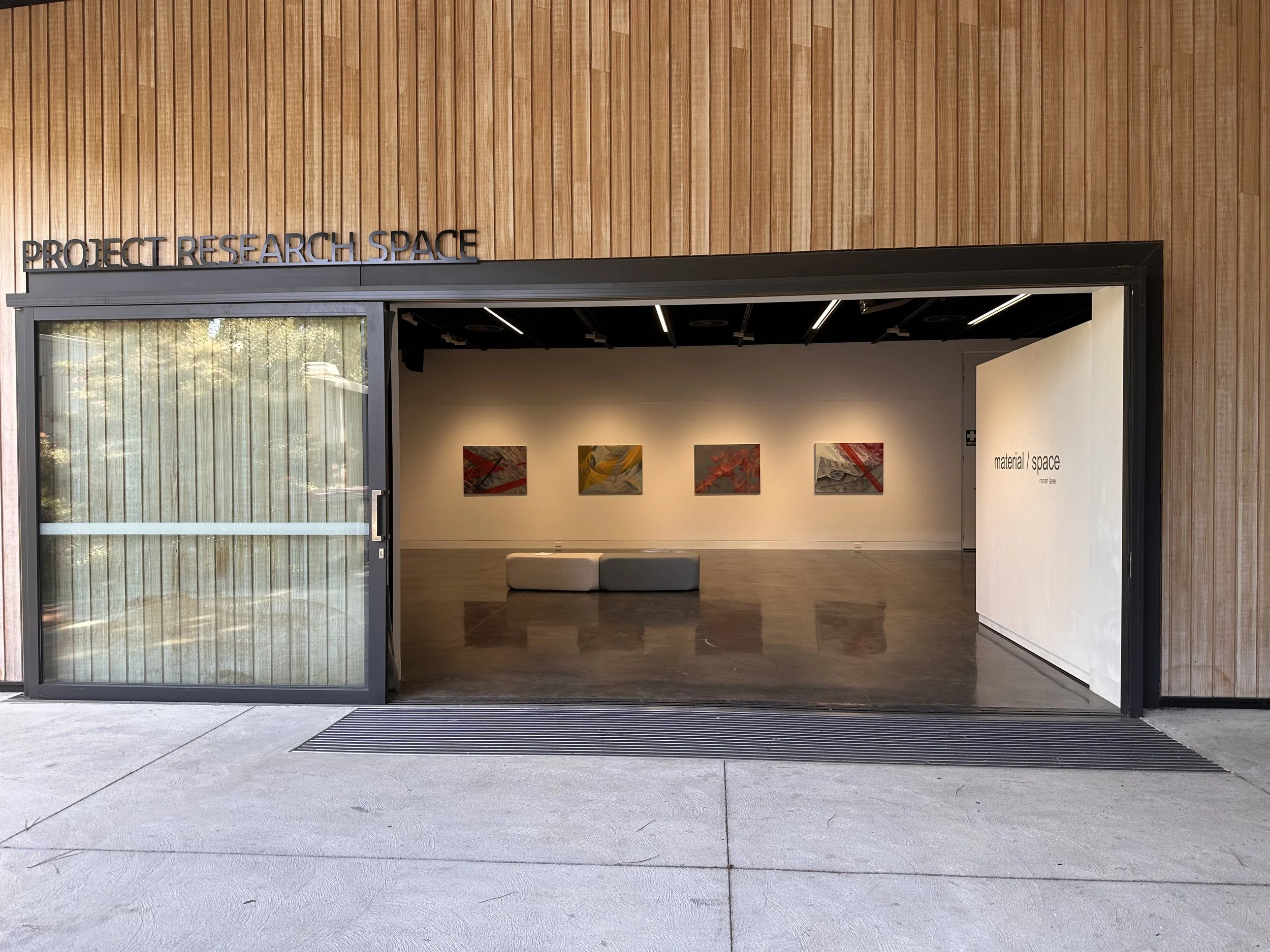
These works explore the difference between the sensation of vision and the depiction of it, by not relying on illustration to do either, but instead focusing on materiality, surface, and the removal of additional information.
The exploration of the physical depth of the painting helps to define the colour space as an active component in the work. This is the difference between the structure of the painting and the structure of the illusion. The half-life of images in the contemporary screen-saturated paradigm affects the experience of painting. Digitisation and social media have helped usher in a new visual lexicon. This project examines material spatiality and the impact of the digital encounter.
The current visual lexicon has adapted in response to the hyper mobile image, wherein access, saturation, and instantaneity are fundamental. This change marks what Erwin Panofsky would describe as a new visuality: that is, vision and imagery tied to cultural understanding. With each era, new symbolic forms develop.
These works explore the underlying fundamental concerns of the visual lexicon in terms of materiality, vision, and presence.
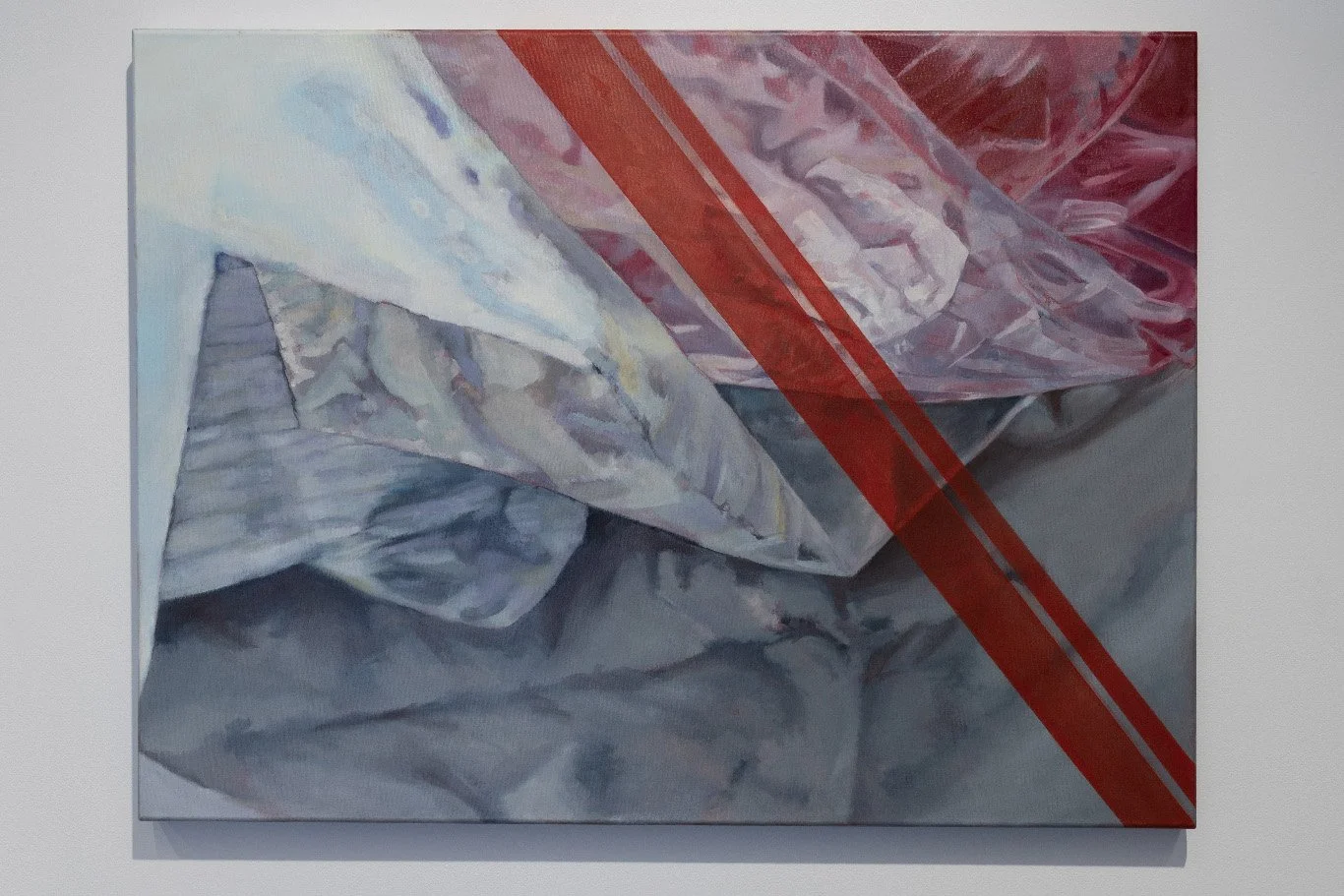
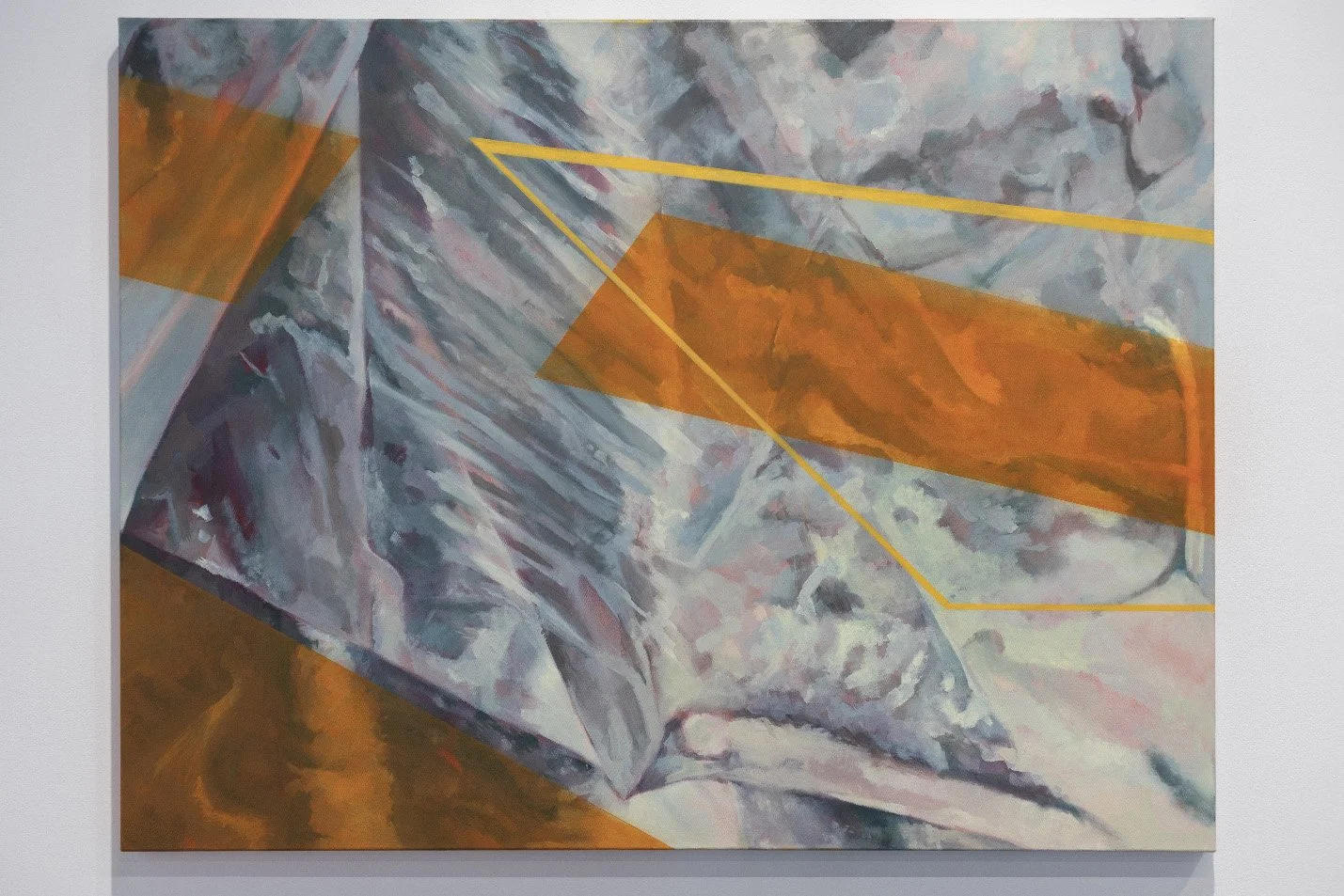
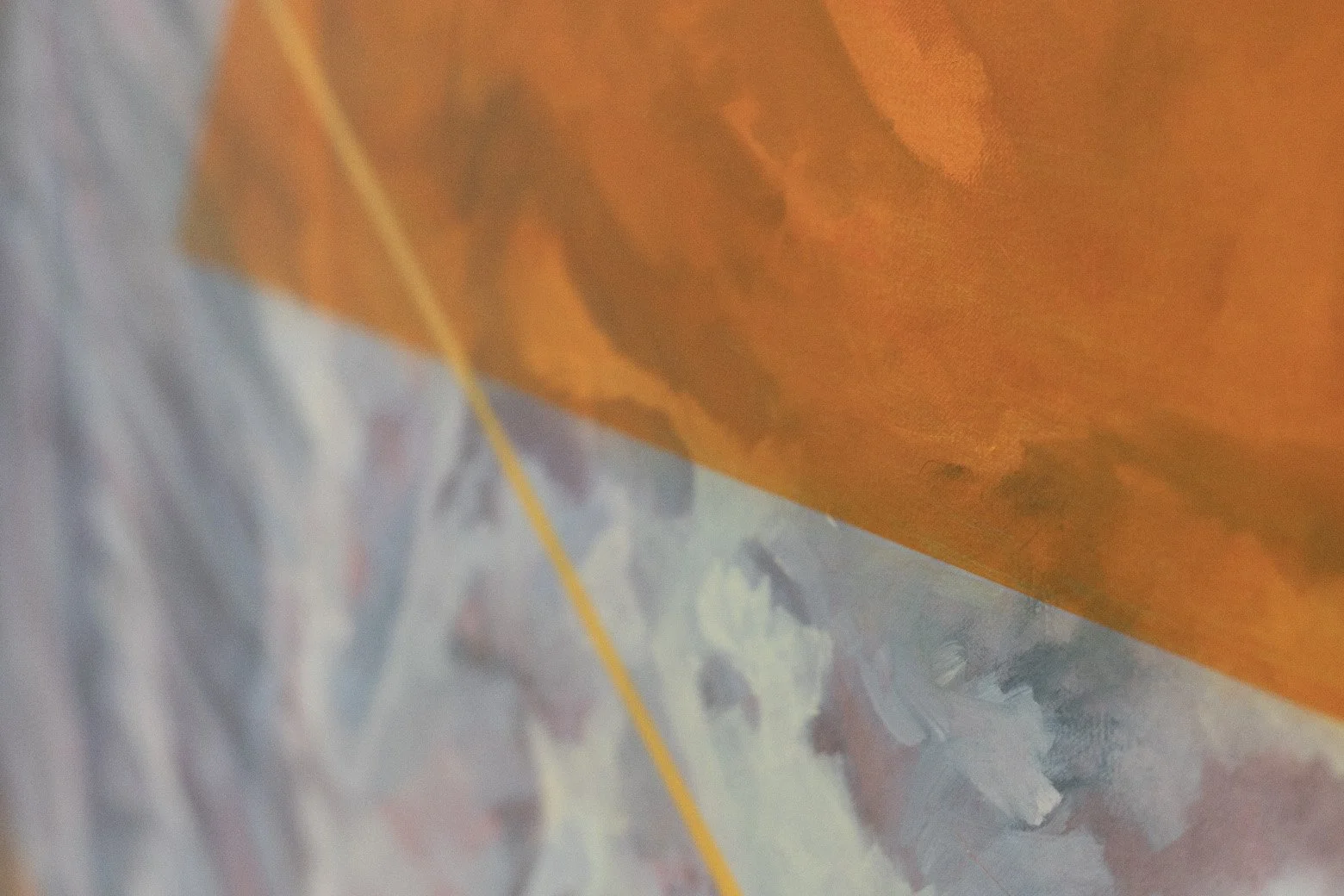
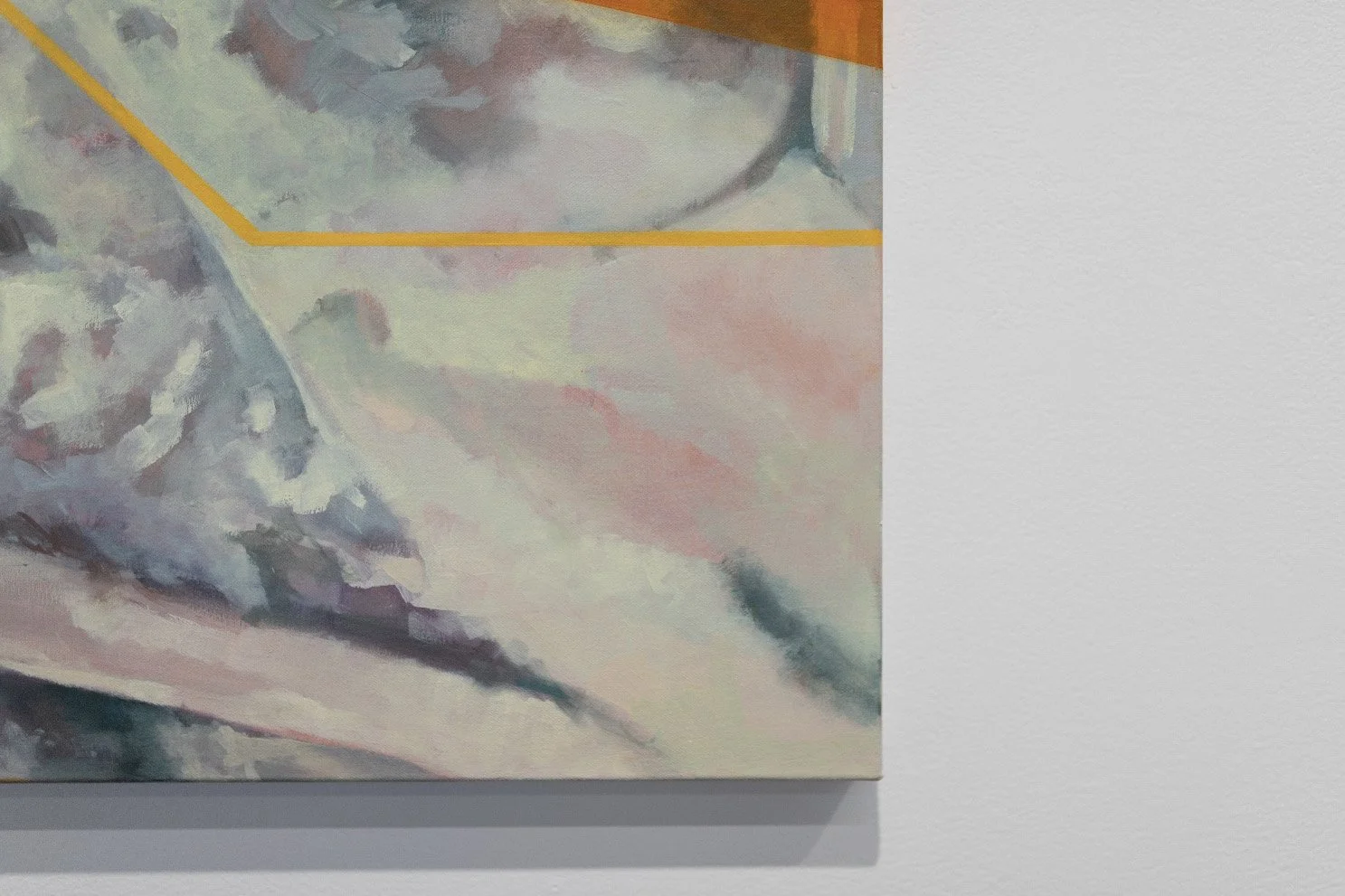
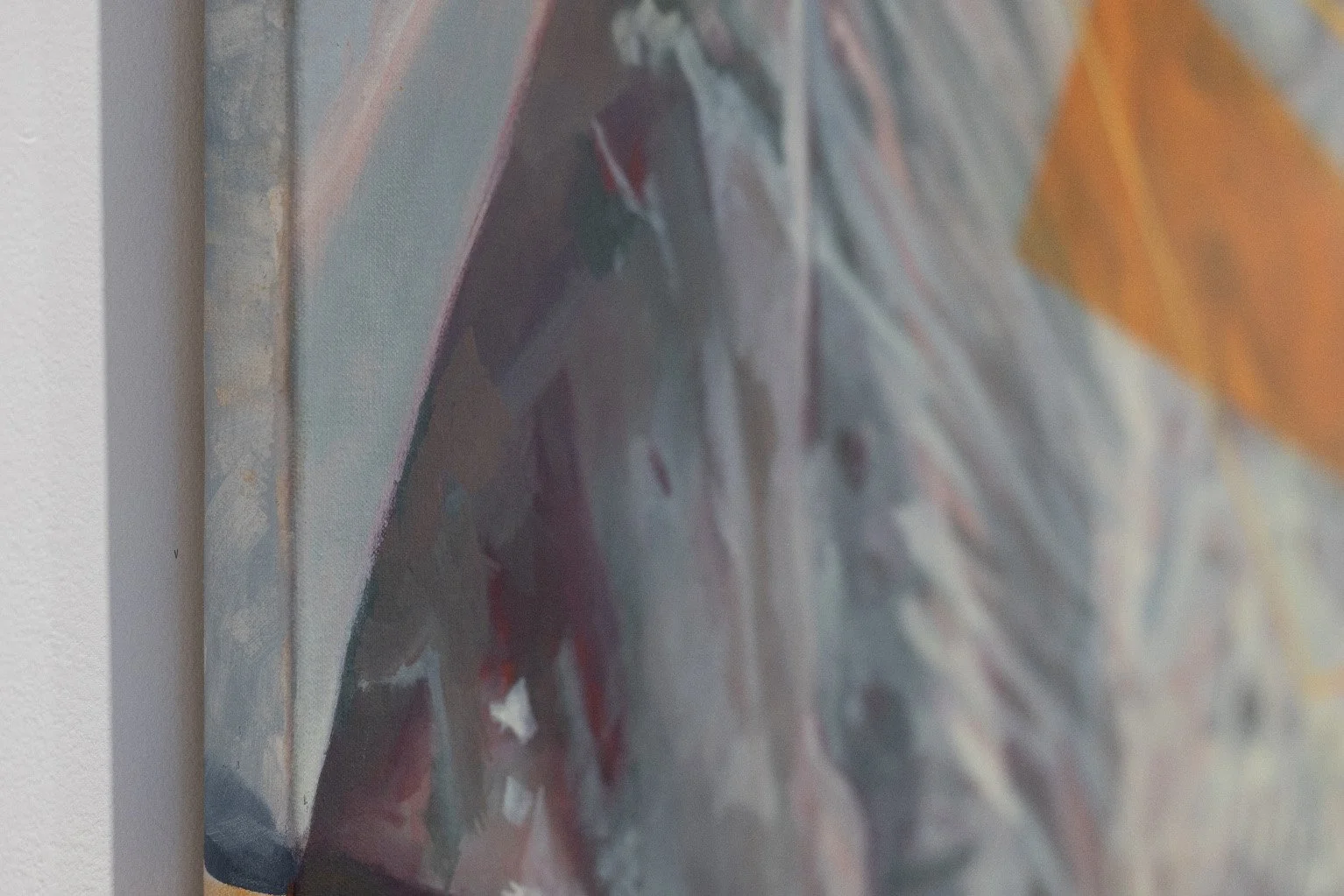
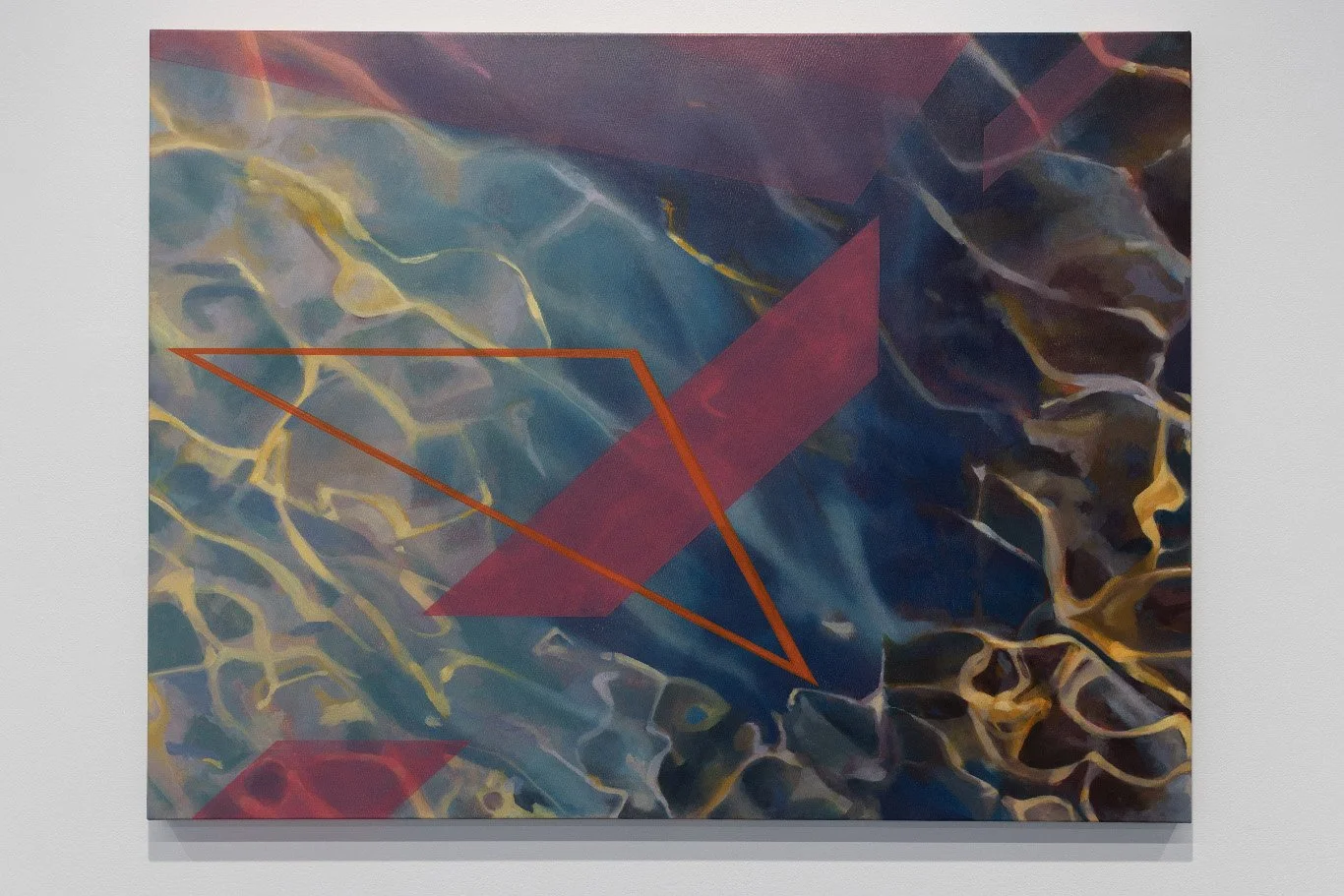
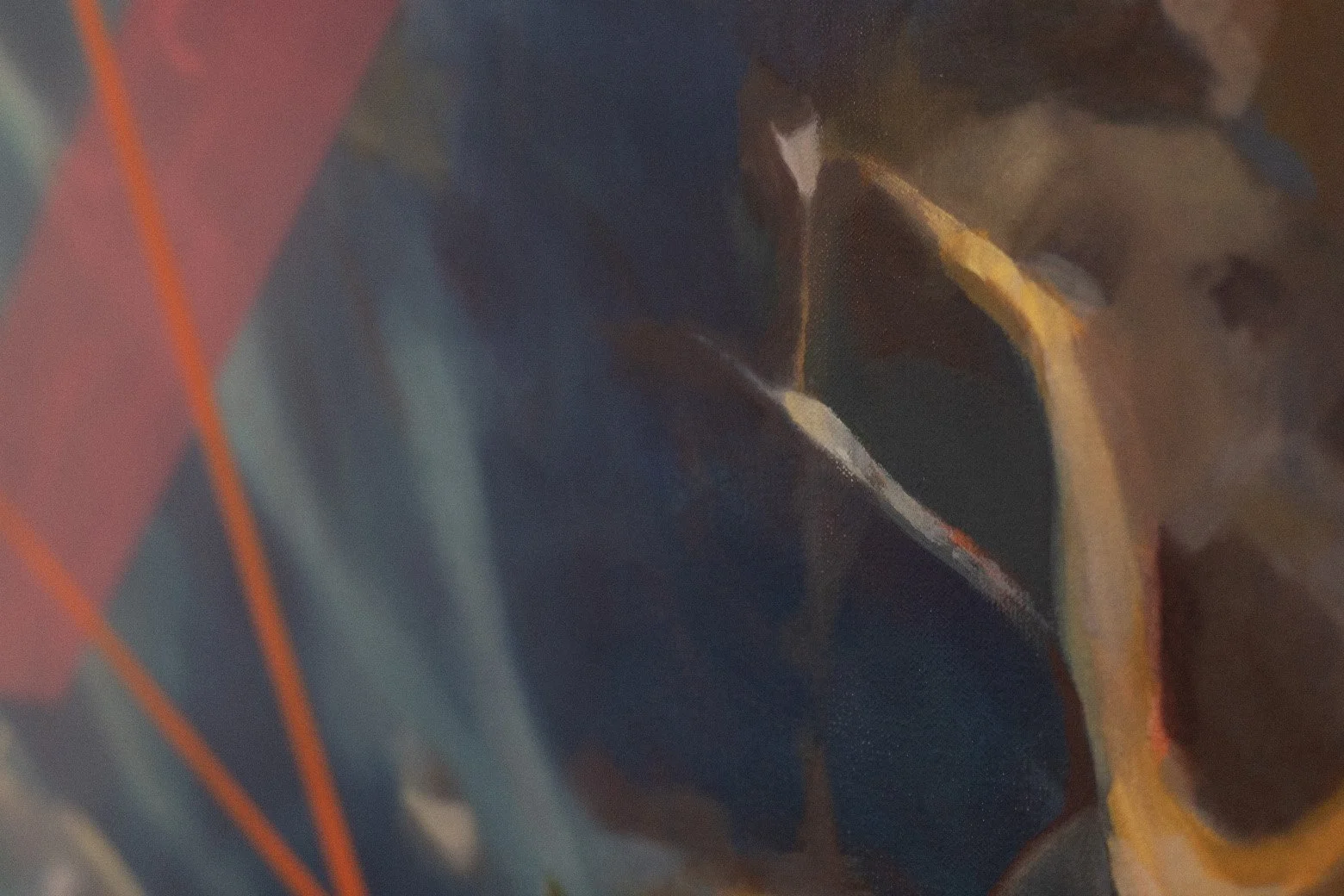
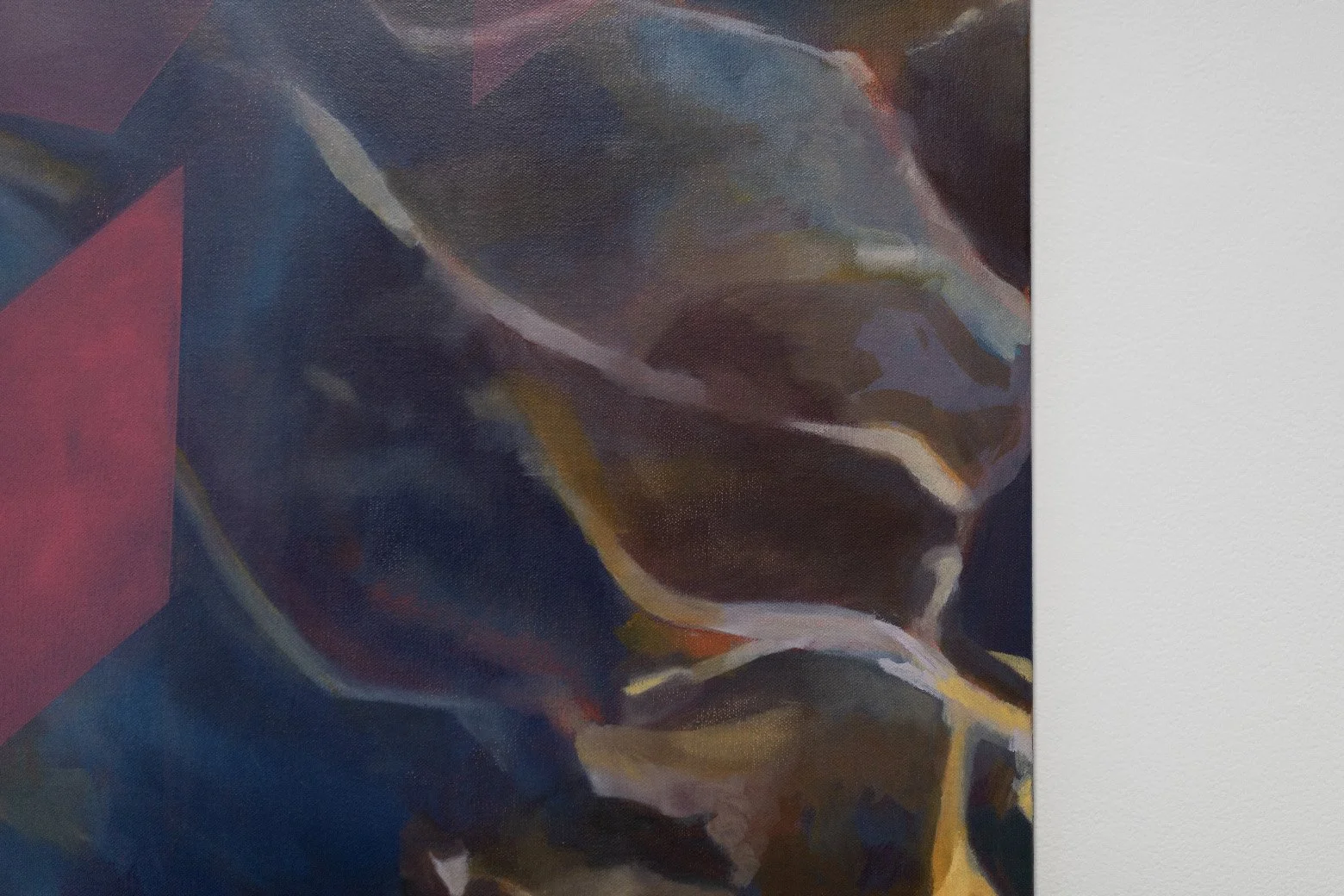
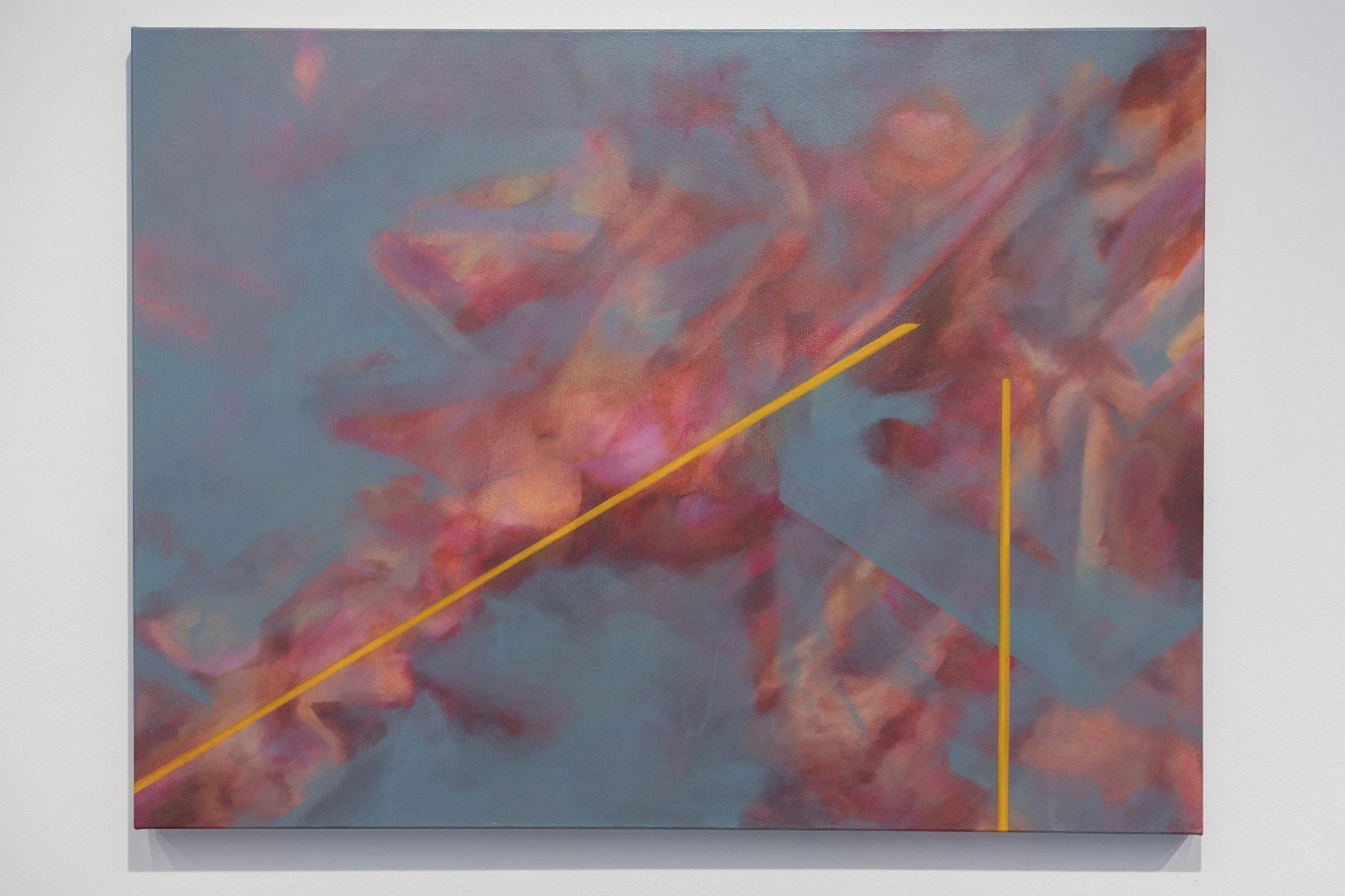
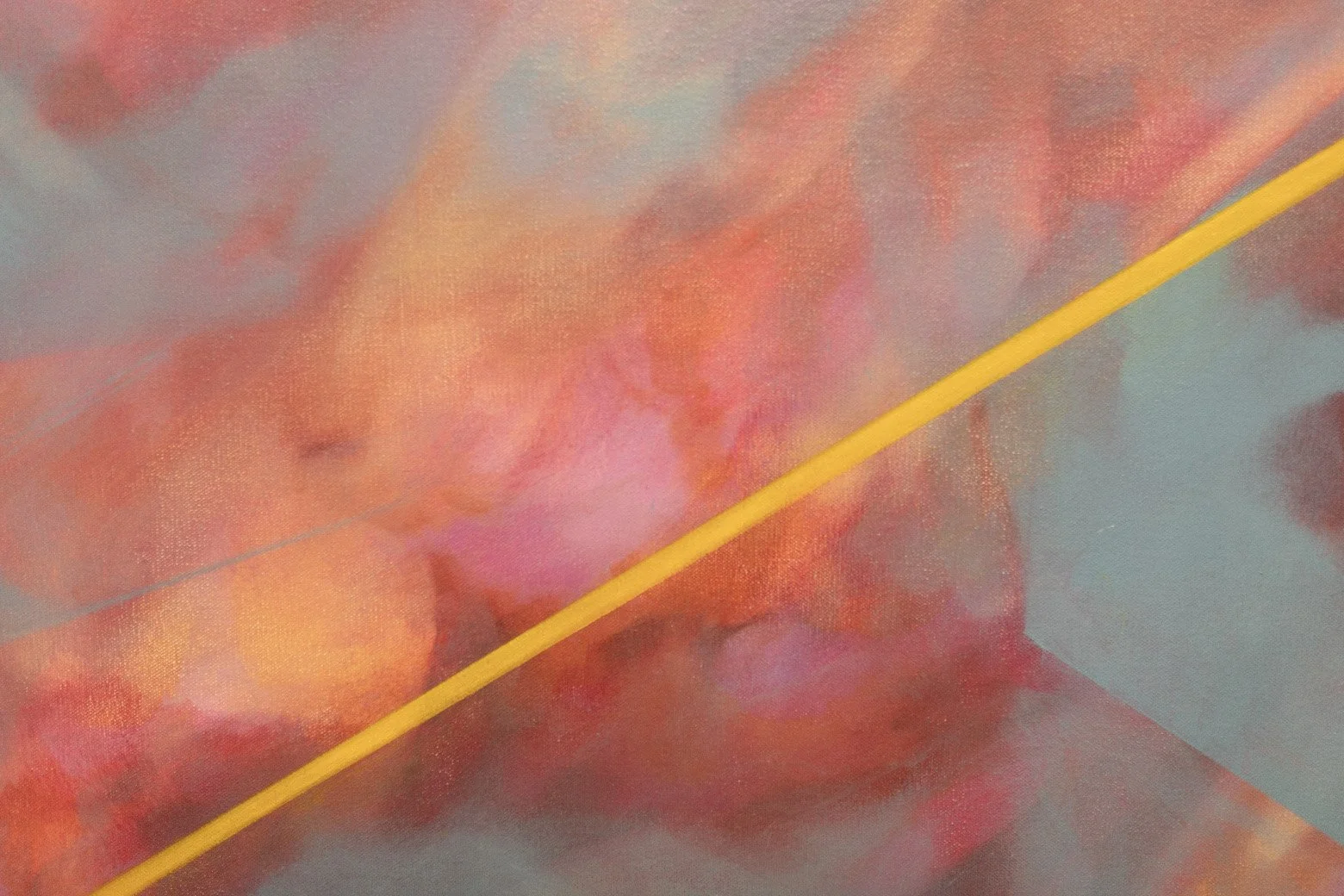
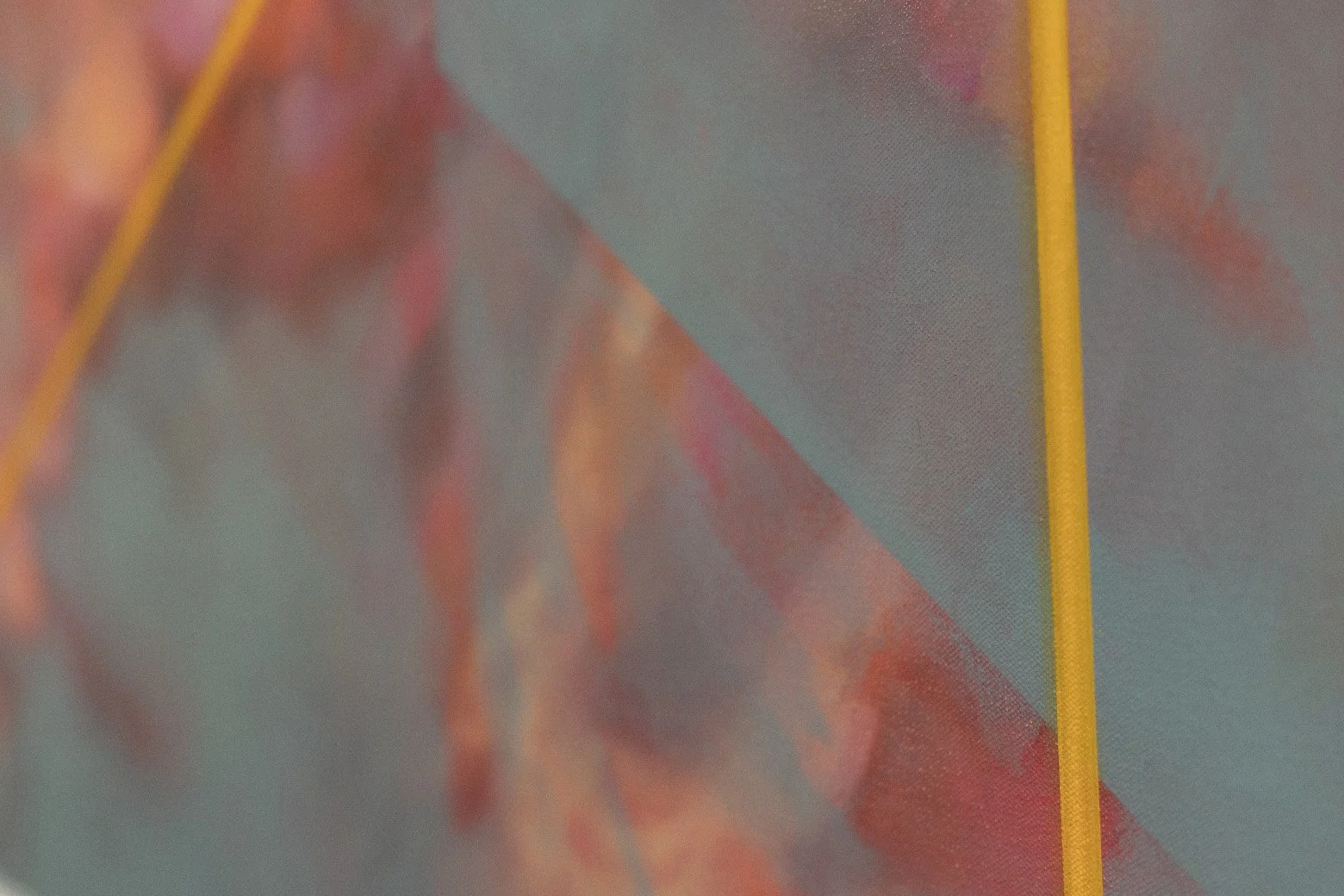
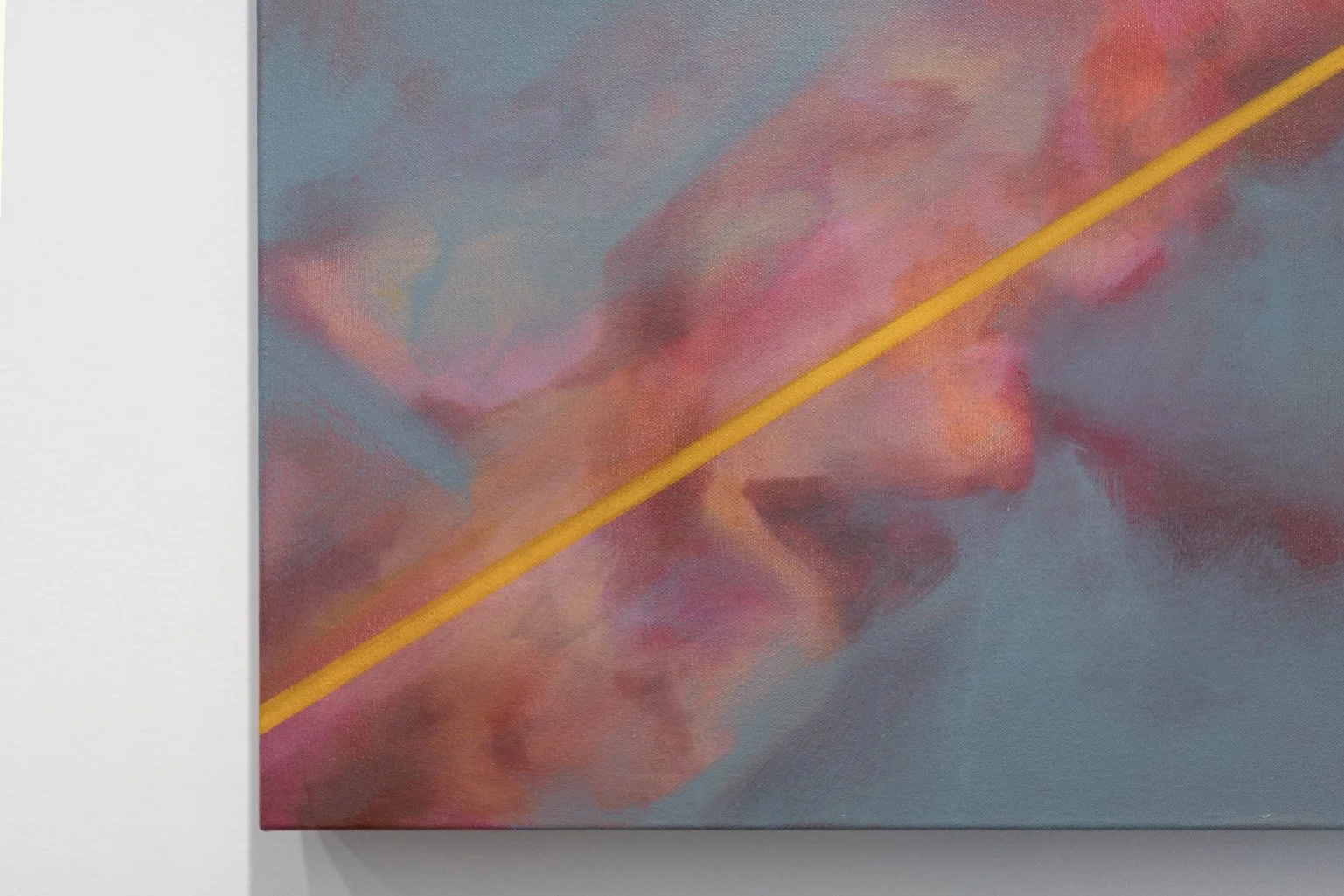
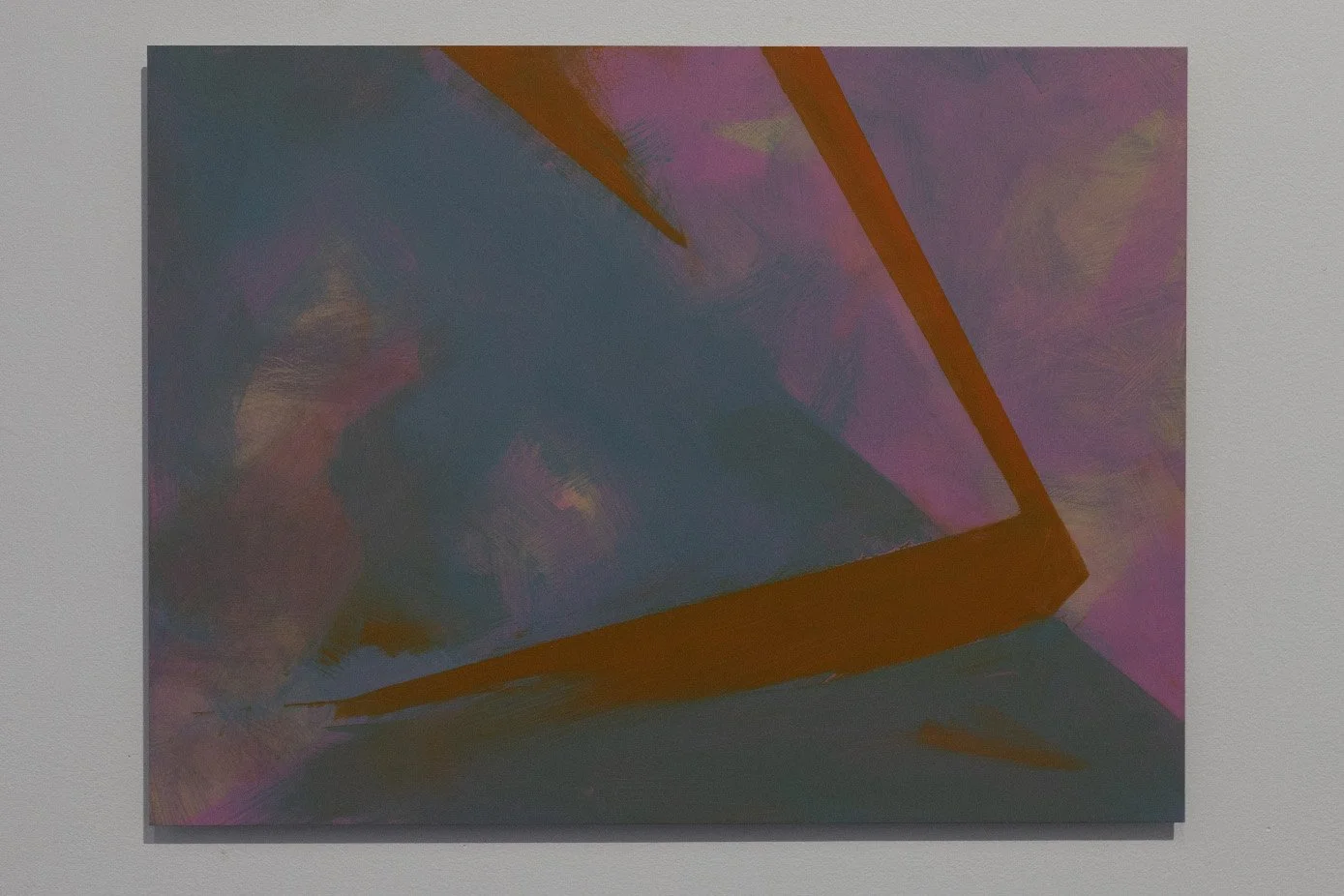
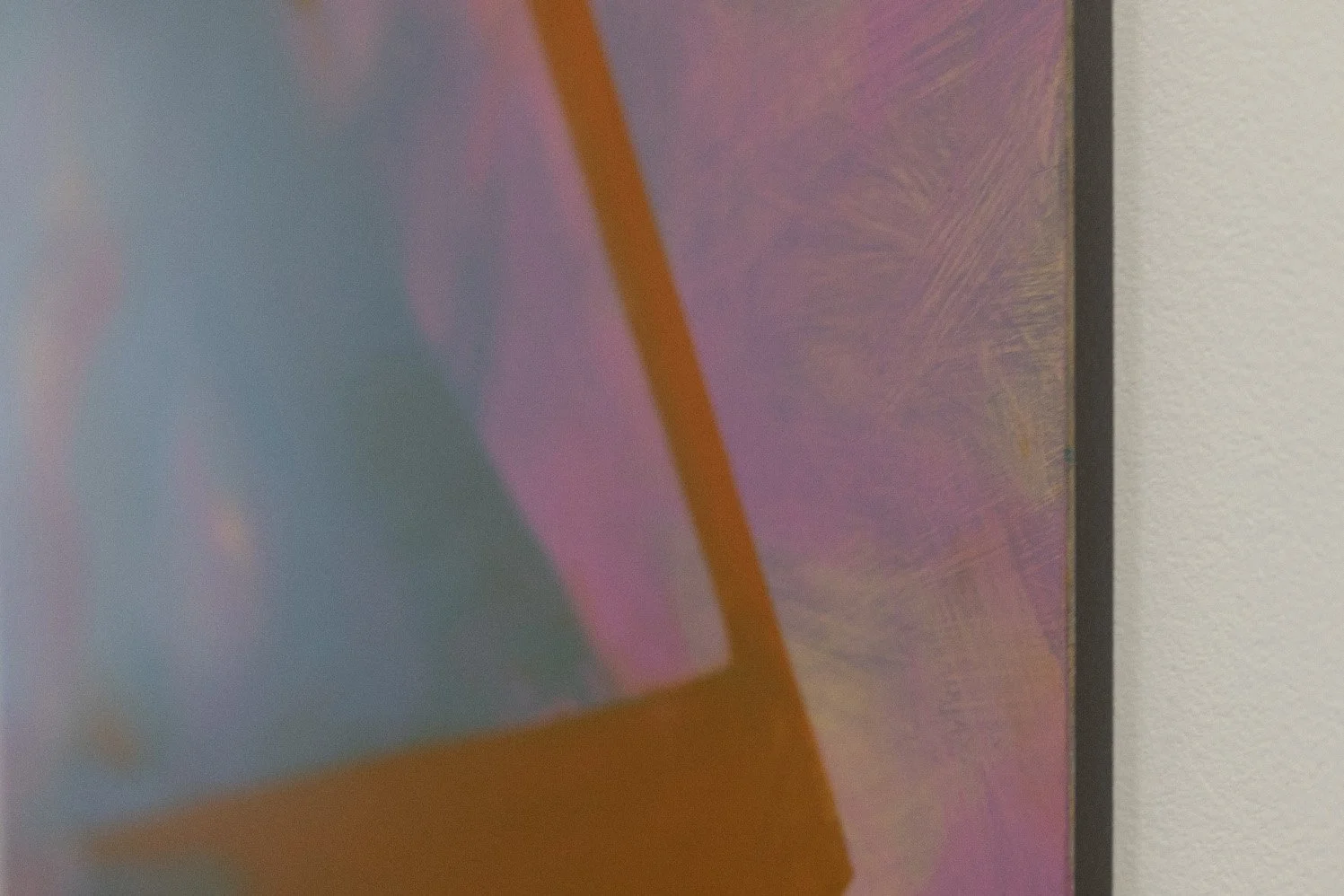
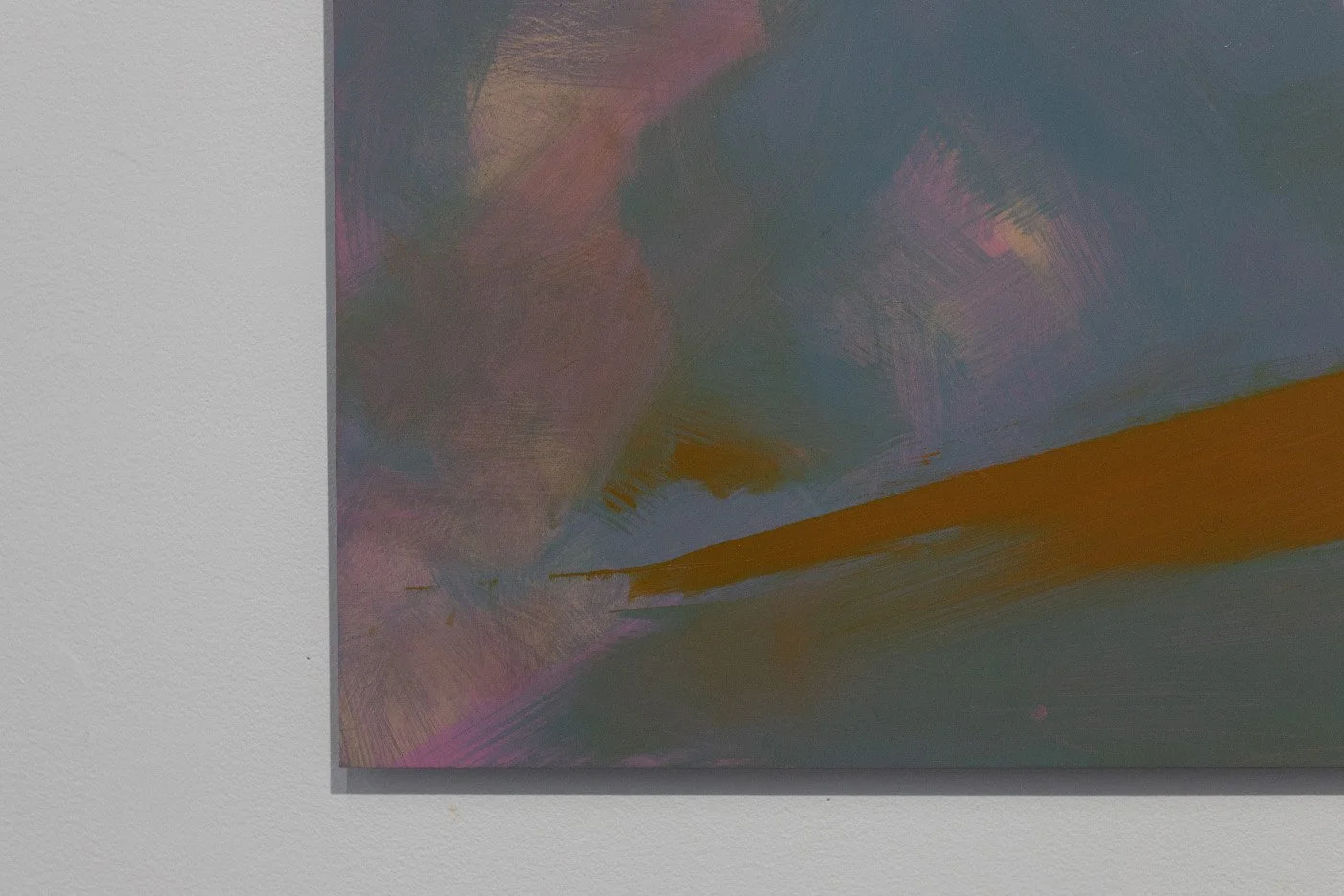
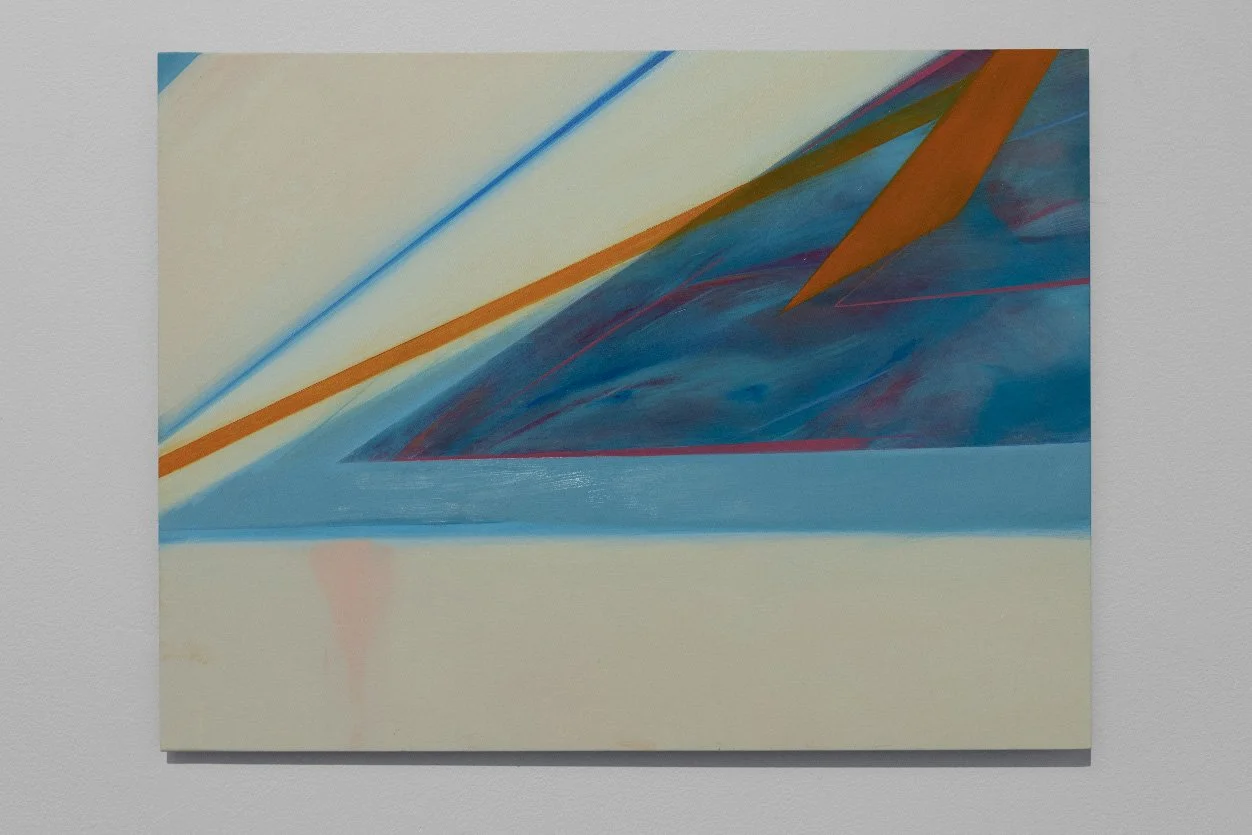
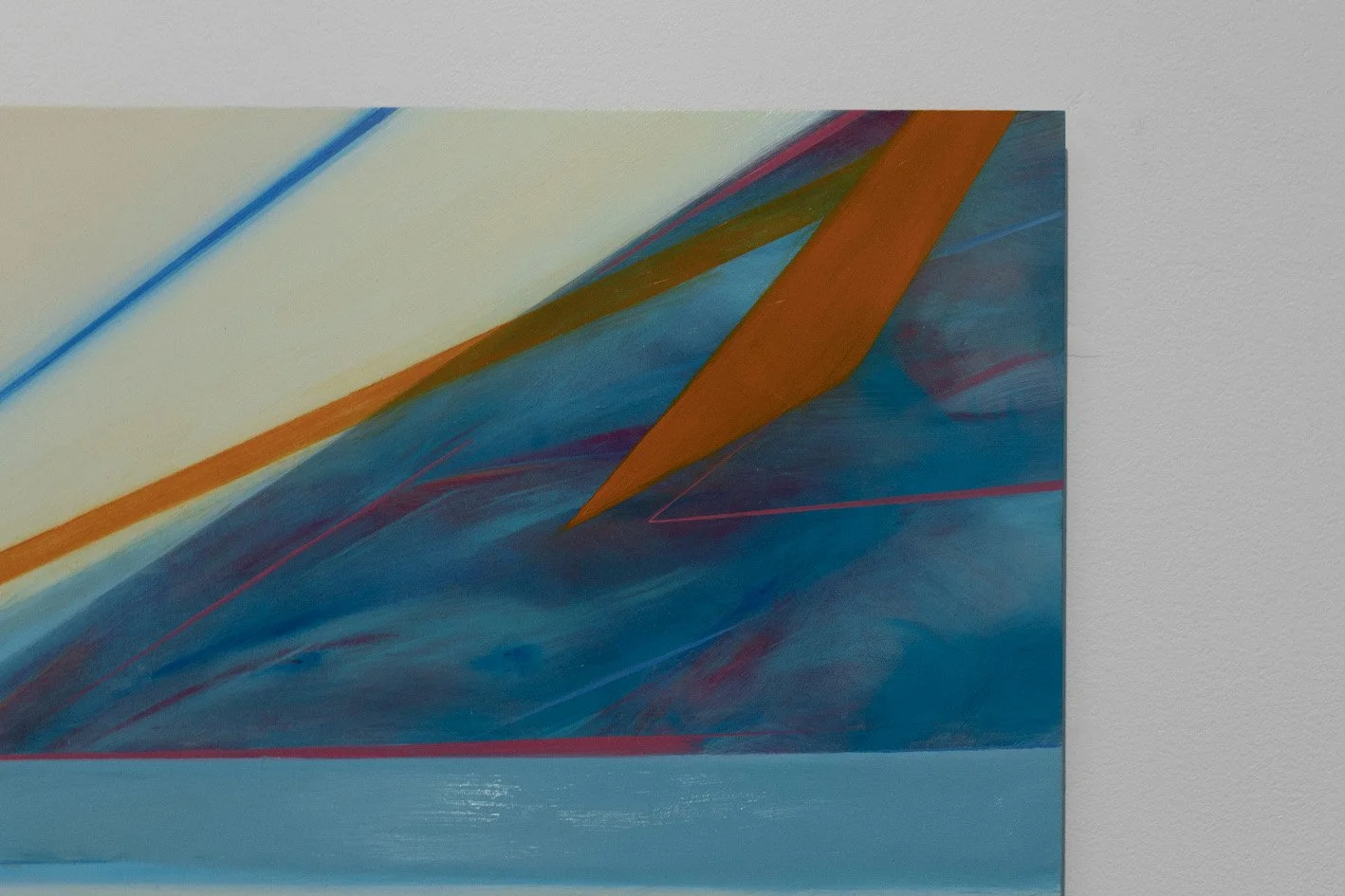
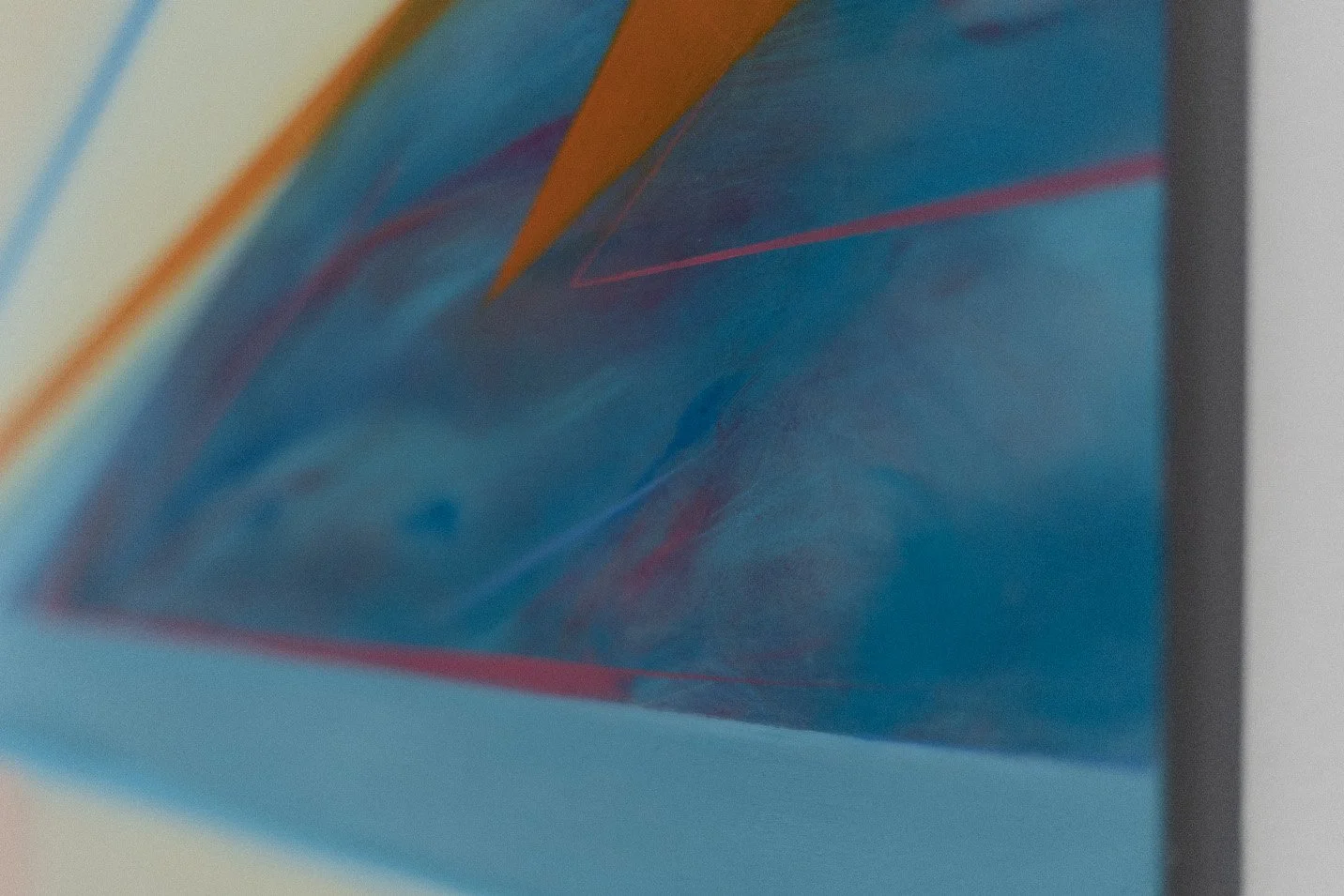
The exhibition centres on the importance of the physical presence of an artwork, and an active viewer.
Six medium sized paintings explore the dualities of illusionistic space and the material qualities of a flat non-representational one. Through the juxtaposition of representational themes of translucency and light with geometric abstraction, the works entice and beguile the viewer.
Similarly six small works on aluminium, board, and canvas push this concept of the image at odds with itself. Where divergent forms of representation, and illusion, clash and reform in a visual interplay dependant on attention.
To act as a counter to this exploration of the physical presence of an artwork is a series of prints. More accurately a series of prints of photographs of people holding prints of scans of drawings. These works explore both the mediated experience of a work through a screen, and ideas of authenticity. The person depicted is blocked by the print they are holding, we see them as a surrogate for the museum. Their white gloves mimicking best practices, while the background reveals a domestic setting. The works they are holding are editioned prints, copies of an original, while the work being presented is a photograph of that moment. The work being displayed is a copy, the original of which is never seen.